Squint eye treatment - children and adults
Consultation scheduling, insurance coordination and post-op follow-up handled by a dedicated care coordinator.
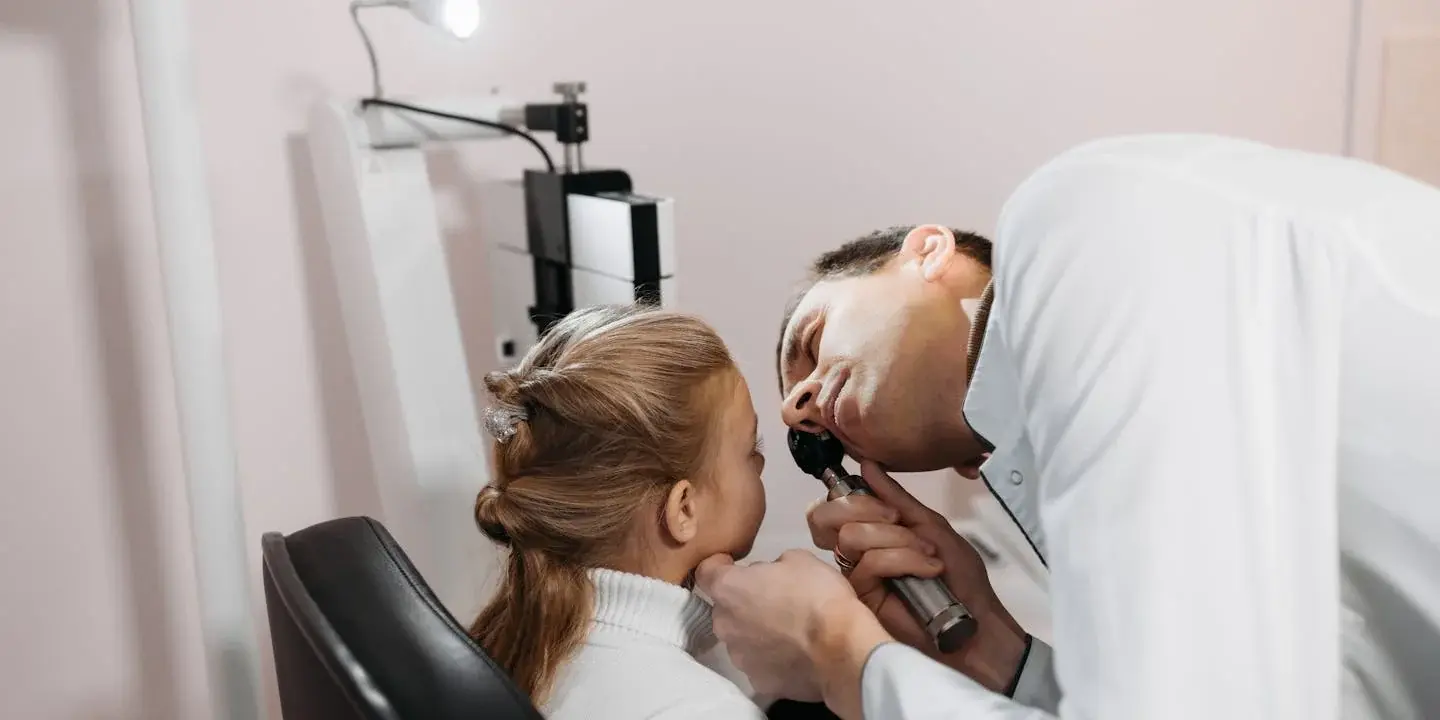
What is a squint and why does it matter?
Strabismus (squint) occurs when the six muscles controlling each eye do not work in coordination, causing one or both eyes to deviate from normal alignment. The eye may turn inward (esotropia), outward (exotropia), upward (hypertropia) or downward (hypotropia).
In children, the brain quickly learns to ignore the signal from the deviating eye to avoid confusion - a process called suppression. This prevents double vision but causes the deviating eye to develop poor vision (amblyopia, or "lazy eye"). If untreated before age 8 - 10 years, this vision loss can become permanent.
In adults who develop sudden squint, double vision is the primary symptom and may indicate an underlying neurological cause that requires urgent assessment.
Types of squint
How squint is treated at Eye Veda
Spectacle correction
Many squints in children - particularly accommodative esotropia - are fully or partially corrected with the right glasses prescription. Always the first step in children with a significant refractive error.
Patching / Amblyopia therapy
Patching the stronger eye forces the weaker eye to develop. Occlusion therapy is most effective when started early. Eye Veda's specialists monitor visual acuity at each visit.
Botulinum toxin injection
Botox injected into the over-acting eye muscle temporarily weakens it. Useful for certain small-angle squints and as an alternative to surgery in select cases.
Strabismus surgery
Surgical adjustment of the eye muscles to achieve correct alignment. Performed under anaesthesia. 85%+ success rate for primary squint. Both eyes may be operated in the same sitting.
A specialist-led practice built on referrals, reviews and long-term follow-up.
NABH-aligned care
Structured clinical systems and OT standards
Modern diagnostics
Zeiss, Alcon and advanced imaging platforms
AIIMS-trained specialists
Senior surgical experience across subspecialties
10K+ procedures
Long-term outcomes across cataract, LASIK and retina
4.9/5 patient rating
Referral-driven trust and verified reviews
Book a squint assessment at Eye Veda
Our specialists assess squint in children and adults - including amblyopia evaluation, binocular vision testing and surgical planning where needed.