Diabetic retinopathy - specialist treatment in Delhi
Consultation scheduling, insurance coordination and post-op follow-up handled by a dedicated care coordinator.
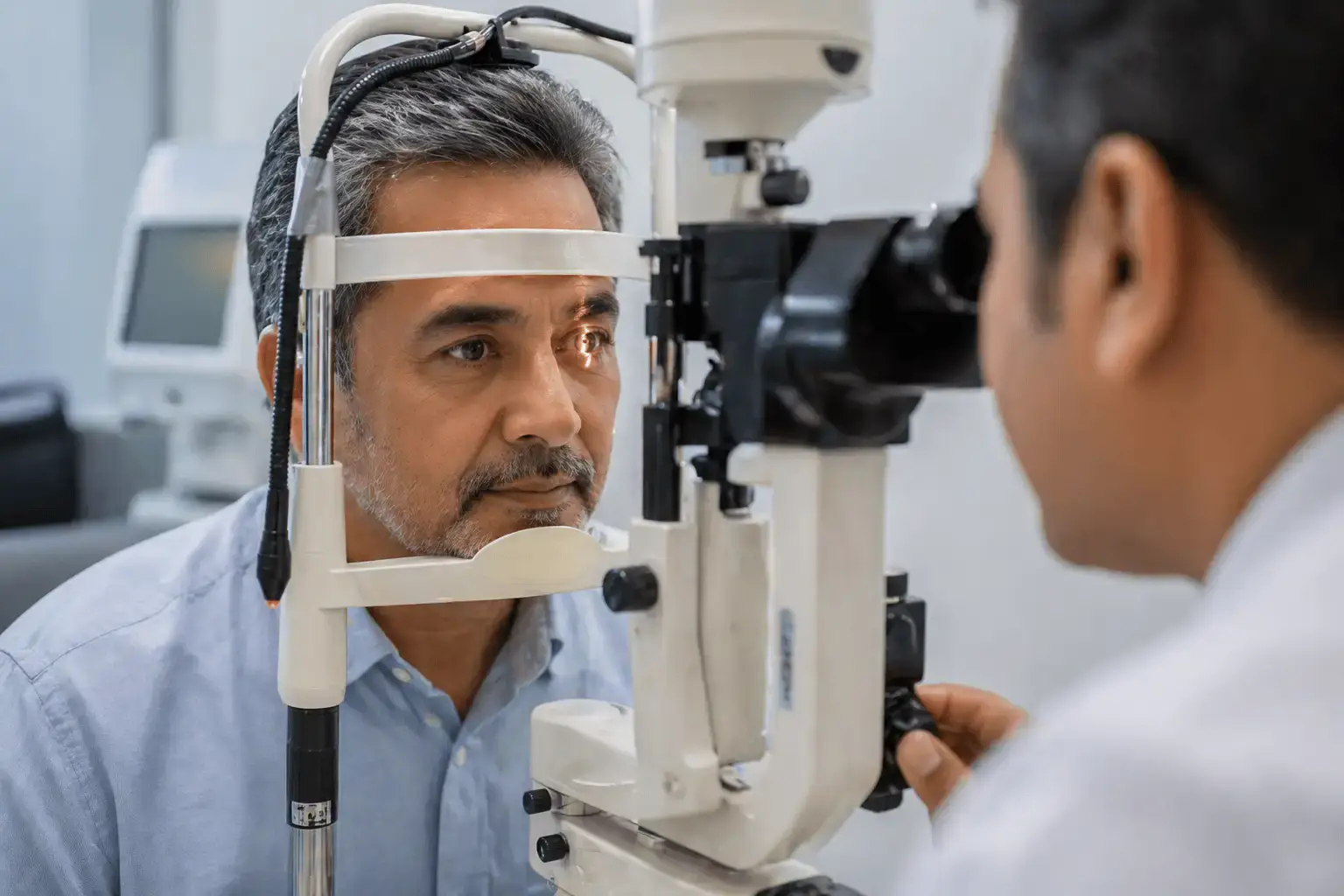
How diabetes damages the eye
Diabetic retinopathy occurs when persistently high blood sugar levels damage the small blood vessels in the retina - the light-sensitive layer at the back of the eye. Damaged vessels leak fluid, bleed, or close off entirely, depriving retinal cells of oxygen. In advanced cases, abnormal new blood vessels grow and can cause severe vision loss through vitreous haemorrhage or traction retinal detachment.
The most insidious aspect of diabetic retinopathy is that it often has no symptoms in its early stages - yet this is the period when treatment is most effective and vision loss most preventable. By the time a patient notices blurred or distorted vision, significant damage has often already occurred.
In India, an estimated 17 million diabetic patients have some form of retinopathy. The majority are unscreened. A single annual dilated fundus examination can detect the disease early enough to preserve vision in most cases.
Understanding the stages - and when to act
How we treat diabetic retinopathy
Retinal Laser Photocoagulation
The standard treatment for proliferative DR and macular oedema. Laser seals leaking blood vessels and reduces the drive for abnormal new vessel growth. Done as an outpatient procedure under topical anaesthesia.
Anti-VEGF Intravitreal Injections
Avastin, Lucentis or Eylea injected into the vitreous cavity. Significantly reduces macular oedema and can improve central vision in DMO patients. Typically given monthly for 3 doses, then as needed.
Sustained-Release Steroid Implants
Ozurdex (dexamethasone implant) provides 4 - 6 months of sustained steroid release for refractory DMO. Fewer injections than anti-VEGF for suitable patients.
Pars Plana Vitrectomy (PPV)
Surgery for advanced PDR with vitreous haemorrhage, traction retinal detachment, or non-clearing haemorrhage. Eye Veda's vitreoretinal team performs both primary and complex re-operative cases.
A specialist-led practice built on referrals, reviews and long-term follow-up.
NABH-aligned care
Structured clinical systems and OT standards
Modern diagnostics
Zeiss, Alcon and advanced imaging platforms
AIIMS-trained specialists
Senior surgical experience across subspecialties
10K+ procedures
Long-term outcomes across cataract, LASIK and retina
4.9/5 patient rating
Referral-driven trust and verified reviews
Book your retinal assessment at Eye Veda
All diabetic patients should have annual dilated retinal screening. Our retina specialists offer same-week urgent appointments and comprehensive diabetic eye care.
Diabetic retinopathy - frequently asked questions
Sudden blurring, floaters or dark patches may indicate a retinal emergency. Call +91 88004 33050 immediately.