What is dry eye disease?
Dry eye disease (DED) is a multifactorial condition of the tears and ocular surface that results in discomfort, visual disturbance, and tear film instability - with potential damage to the ocular surface. It is not simply about having insufficient tears. The quality and composition of the tear film matters as much as the quantity.
A healthy tear film has three layers: an outer oily layer (from meibomian glands in the eyelids), a middle aqueous layer (from the lacrimal gland), and an inner mucin layer (from goblet cells on the conjunctiva). Disruption of any layer - through evaporation, inflammation, or gland dysfunction - destabilises the film and causes symptoms.
Globally, dry eye affects an estimated 5-50% of adults depending on the population studied. In urban India, rates are high and rising, driven by environmental factors unique to cities like Delhi.
Why Delhi is a dry eye hotspot
Several factors make Delhi particularly challenging for ocular surface health:
- Air quality - PM2.5, ozone, and nitrogen dioxide from traffic and industrial emissions directly inflame the ocular surface and destabilise the tear film lipid layer.
- Low humidity - Delhi’s dry winters and air-conditioned offices create environments where tear evaporation rate far exceeds production.
- Screen exposure - The city’s IT-heavy workforce logs some of the highest screen hours in the country. Reduced blink rate with screens is a major cause of evaporative dry eye.
- Ceiling fans - Air movement across the ocular surface accelerates evaporation. Sleeping under a ceiling fan is a commonly overlooked contributing factor.
Symptoms to watch for
Dry eye symptoms are often non-specific and dismissed as tiredness or allergy. The following warrant a proper evaluation:
A distinctive feature of dry eye is that blurred vision improves with blinking - as the blink refreshes the tear film. If your vision blurs and then clears when you blink, dry eye is a likely contributor.
Types of dry eye
Understanding which type of dry eye a patient has guides treatment. The two main types often coexist:
Aqueous deficient dry eye (ADDE)
The lacrimal gland does not produce enough aqueous (watery) tears. This is less common and is associated with conditions like Sjogren’s syndrome, lacrimal gland disease, or as a side effect of certain medications (antihistamines, antidepressants, diuretics, beta-blockers).
Evaporative dry eye (EDE)
The most common type - accounting for around 85% of all dry eye. Tears evaporate too quickly because the oily outer layer is deficient. The primary cause is meibomian gland dysfunction (MGD) - the oil-secreting glands in the eyelids become blocked or atrophied. Blepharitis (lid margin inflammation) is a closely related condition.
How dry eye is diagnosed
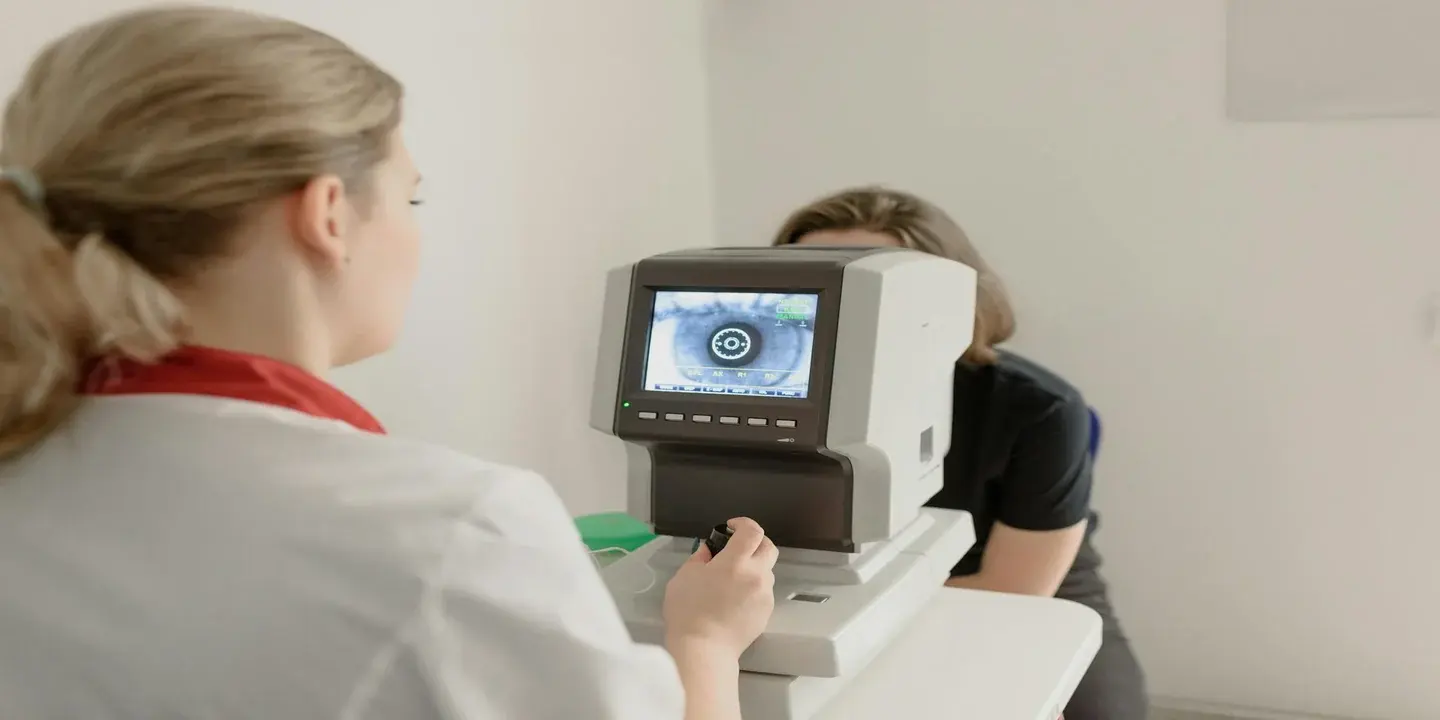
A comprehensive dry eye evaluation at Eye Veda includes:
- Symptom questionnaire - OSDI or SPEED score to quantify symptom burden
- Slit-lamp examination - assessment of lid margins, meibomian gland orifices, conjunctival redness, and corneal surface
- Tear break-up time (TBUT) - fluorescein dye is instilled and the time until the first dry spot appears in the tear film is measured. Less than 10 seconds indicates instability.
- Schirmer’s test - a strip of filter paper placed under the lower lid measures aqueous tear production over 5 minutes
- Corneal staining - fluorescein or Rose Bengal dye reveals epithelial damage from desiccation
- Meibography - infrared imaging of the eyelids to assess meibomian gland structure and identify dropout (loss of gland tissue)
Treatment options at Eye Veda
Dry eye treatment is stepwise - starting with conservative measures and escalating based on severity. Dr. Surabhi Dutt leads cornea and dry eye care at Eye Veda and tailors treatment to each patient’s phenotype.
Preservative-free artificial tears
The foundation of dry eye management. Preservative-free formulations are essential for frequent use - preserved drops used more than 4 times daily can themselves damage the ocular surface.
Omega-3 supplementation
High-dose EPA/DHA omega-3 (1-2g daily) reduces lid margin inflammation and improves meibomian gland secretion quality over 3 months. Strong evidence from the DREAM study.
Warm compress & lid hygiene
10 minutes of warm compress (40-45°C) twice daily melts solidified meibomian gland secretions. Followed by lid massage to express oils. A simple, free and highly effective first step.
Intense Pulsed Light (IPL)
Light energy applied to the skin around the eyelids reduces lid margin inflammation and improves meibomian gland function. 4 sessions 3-4 weeks apart. Long-lasting benefit for moderate-severe MGD.
Cyclosporin eye drops
Prescription anti-inflammatory drops (Restasis, Ikervis) that reduce T-cell mediated inflammation on the ocular surface. Takes 3-6 months to achieve full effect. Used for aqueous-deficient and inflammatory dry eye.
Punctal plugs
Tiny silicone plugs inserted into the tear drainage openings (puncta) to retain tears on the eye surface longer. Quick in-office procedure. Particularly effective for aqueous-deficient dry eye.
Practical steps you can take today
- Switch to preservative-free artificial tears - use them before symptoms peak, not just after
- Apply a warm compress to closed eyelids for 10 minutes, morning and evening
- Follow the 20-20-20 rule when using screens
- Increase indoor humidity with a humidifier, particularly in AC environments
- Wear wraparound sunglasses outdoors to reduce wind and pollution exposure
- Take regular omega-3 supplements (fish oil or algal DHA/EPA)
- If you sleep under a ceiling fan, try pointing it away from your face