
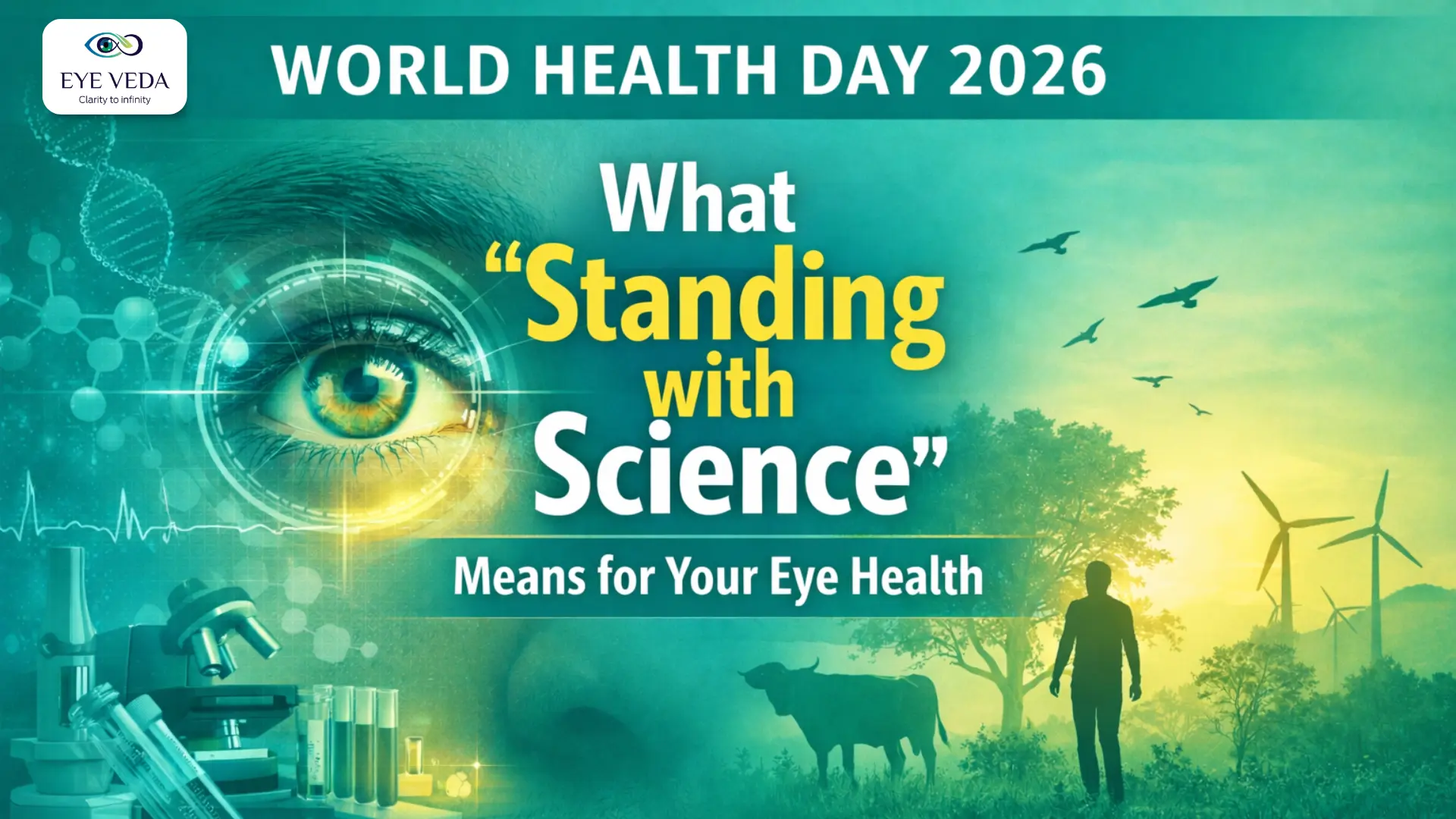
On World Health Day 2026, the global theme—“Together for health. Stand with science”—is more than a message. It is a reminder to make informed, evidence-based decisions about your health.
When it comes to eye care, this approach becomes critical. Vision problems often develop gradually and without obvious symptoms, making timely intervention dependent on awareness and scientific evaluation.
The Reality: Most Eye Problems Don’t Start with Symptoms
A common assumption is that clear vision means healthy eyes. Clinically, this is not always accurate.
Several conditions—including cataracts, glaucoma, and diabetic retinopathy—can progress silently in their early stages. In many cases:
- Vision loss is gradual
- The brain compensates for minor deficiencies
- Symptoms appear only when daily functioning is affected
This makes early detection through scientific diagnostics essential.
How Science Has Transformed Eye Care
Modern ophthalmology has shifted from reactive treatment to proactive care.
Early and Accurate Diagnosis
Advanced imaging technologies allow specialists to detect microscopic changes in the retina and optic nerve before symptoms arise.
Risk-Based Assessment
Scientific evaluation considers individual risk factors such as age, lifestyle, and underlying health conditions to predict potential issues.
Minimally Invasive Treatments
Procedures today are more precise, safer, and designed for faster recovery with minimal disruption to daily life.
Personalized Care Plans
Treatment is now tailored to each patient, ensuring better outcomes and long-term vision preservation.
Science enables intervention at the right time often before damage becomes irreversible.
Understanding the “One Health” Approach in Eye Care
The One Health approach highlights the connection between human health, environment, and lifestyle.
In the context of eye health:
- Digital exposure contributes to strain, dryness, and fatigue
- Nutrition plays a role in maintaining retinal and overall eye health
- Chronic conditions like diabetes directly impact vision
- Environmental factors such as pollution and UV exposure can cause long-term damage
Eye health is not isolated; it reflects broader lifestyle patterns.
Why Regular Eye Check-Ups Are Essential
A science-based approach recommends:
- Eye examinations every 1–2 years for individuals without symptoms
- Annual check-ups for those with risk factors
Comprehensive eye exams:
- Assess internal eye structures
- Detect early disease markers
- Prevent progression of serious conditions
Preventive care is significantly more effective than corrective treatment.
Signs That Require Immediate Attention
While many conditions are asymptomatic, certain signs should not be ignored:
- Sudden blurred vision
- Persistent eye strain
- Frequent headaches
- Difficulty seeing at night
- Flashes or floaters
These are indicators that require professional evaluation.
How to Practically “Stand with Science”
Adopting a science-backed approach to eye health involves simple, consistent habits:
- Follow the 20-20-20 rule to reduce digital strain
- Maintain a balanced diet rich in eye-supporting nutrients
- Use protective eyewear when exposed to screens or sunlight
- Avoid self-diagnosis and rely on professional consultation
- Schedule routine eye examinations
These steps are small but impactful in preserving long-term vision.
The Larger Message of World Health Day
World Health Organization emphasizes the importance of rebuilding trust in science and encouraging evidence-based health decisions.
For eye care, this translates into timely action, informed choices, and reliance on proven medical practices.
Experience Clear Vision with Eye Veda
Take a proactive step towards better vision with expert-led, science-backed eye care.
Address:
GF, E5, Block E, Defence Colony, New Delhi, Delhi 110024
Call:
+91 – 8800433050
Email:
[email protected]
Leave a Reply