
The retina is a delicate, light-sensitive layer at the back of the eye that plays a vital role in vision.
Sometimes, this thin layer can get detached from its normal position — a condition known as retinal detachment, which can lead to sudden and severe vision loss if not treated urgently.
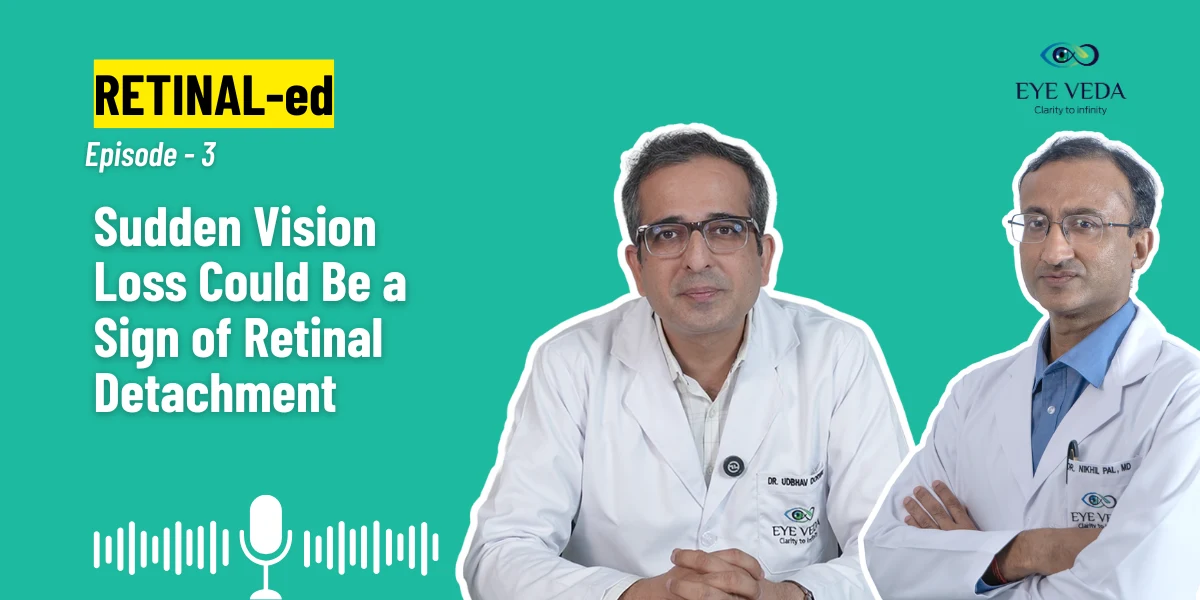
In this insightful discussion, Dr. Nikhil Pal, Retina Specialist at Eye Veda Eye Hospital, Delhi, explains the causes, risk factors, symptoms, and treatment options for retinal detachment, and why early detection is critical for preserving sight.
What Causes Retinal Detachment?
According to Dr. Nikhil Pal, there are three major causes of retinal detachment:
| Cause | Explanation | Risk Level |
|---|---|---|
| High Myopia (Nearsightedness) | In patients with high minus power, the retina becomes thinner and more prone to weak spots. Fluid may seep through these areas, causing the retina to lift or detach. | High |
| Eye Injury or Trauma | Any blow or injury to the eye can cause the retinal layers to separate. | Moderate to High |
| Other Diseases (e.g., Diabetes or Hypertension) | Conditions like diabetic retinopathy or vascular occlusions can damage the retinal blood vessels, increasing the risk of detachment. | High |
“Patients with high myopia, eye injuries, or vascular problems are the ones we see most often with retinal detachments,” explains Dr. Nikhil Pal.
Does Weight Lifting Affect the Retina?
While lifting weights alone doesn’t cause retinal detachment, Dr. Nikhil Pal clarifies that it can lead to retinal bleeding in patients who already have weak or damaged retinal areas.
Therefore, individuals with high myopia or previous eye problems should be cautious and undergo regular checkups.
When Should Myopic Patients Get Retina Checks?
Dr. Nikhil Pal strongly recommends that anyone with myopia (minus power) should schedule regular retinal screenings. Even mild myopia can increase risk.
| Myopia Level (Minus Power) | Chance of Retinal Weak Spots | Recommended Check-Up Frequency |
|---|---|---|
| 0.5D to 1D | ~5% | Once a year |
| 1D to 3D | 10–15% | Once a year or more frequently if advised |
| >3D (High Myopia) | 20–30% | Every 6 months with retina specialist |
“Even a person with -0.5 or -1 power can have a weak retinal spot. Annual screening is crucial,” emphasizes Dr. Nikhil Pal.
How to Identify Retinal Detachment Early
Recognizing symptoms early can make a huge difference in treatment outcomes.
If you notice any of the following signs, consult a retina specialist immediately:
- Sudden loss or shadow in part of the vision
- Flashes of light or new floaters
- Blurred or distorted vision
- Curtain-like darkness across the visual field
Early treatment can restore and protect your vision before permanent damage occurs.
Treatment for Retinal Detachment
The treatment depends on the severity and cause of the detachment.
Dr. Nikhil Pal explains that modern retinal detachment management includes:
- Laser Photocoagulation: Seals small retinal tears or holes before detachment worsens.
- Cryotherapy (Freezing Treatment): Repairs retinal tears by creating scar tissue.
- Vitrectomy Surgery: Removes vitreous gel and reattaches the retina in severe cases.
- Pneumatic Retinopexy: Uses a gas bubble to push the retina back into place.
All these treatments are available at Eye Veda Hospital, performed with advanced technology and precision under the care of Dr. Nikhil Pal and his team.
Contact Us for Best LASIK treatment
Ready for the Best LASIK Treatment in Delhi? Get in touch with Eye Veda Hospital and get a free LASIK workup.
Visit Us: 📍 GF, E5, Block E, Defence Colony, Delhi – 110024
Call Us: 📞 +91-8800433050
Email Us: ✉️ [email protected]
Leave a Reply